Thinking about a new fence in Yardley? Keep reading to learn height limits, setbacks, fees, survey & plot plan needs, and where to apply. Avoid costly violations before building!
We try to keep this information up to date, but we do not represent Yardley Borough. Always check with the Township for the current requirements for fence permits.
If you would like professional help with your new fence, fill out the form below. Bucks Mont Fence will be happy to explore your options and handle the permitting process.
How high can a fence be in Yardley Borough?
In Yardley Borough, the allowable fence height depends on the zoning district, the property’s specific use, and its location relative to intersections.
Residential Properties
- General Height: Fences and walls are generally permitted to be up to six feet in height above the natural grade. Front, side, and rear yard setback requirements do not apply to fences under this height.
- Swimming Pools: Fences surrounding private swimming pools must be at least four feet high but may not exceed six feet in height.
- Spite Fences: No “objectionable, unsightly or spite fence” is permitted on any lot used for residential purposes.
Non-Residential and Industrial Properties
- Accessory Uses: In commercial and industrial districts, accessory fences and walls generally must not exceed five feet in height.
- Industrial Buffers: An industrial development adjacent to residential or commercial zones is required to have a six-foot high board-on-board fence along the perimeter.
- Telecommunications Facilities: Security fences surrounding cellular telecommunications facilities must be a minimum of six feet and a maximum of eight feet in height.
Safety and Traffic Visibility
Regardless of the district, fences located at street intersections (corner lots) are restricted to ensure traffic visibility. Within the “clear-sight triangle” (bounded by the street lines and a straight line connecting them 25 feet from their intersection), no fence may be maintained between two feet and seven feet above curb level.
Historic District
If a property is located within the Historic District, any fence visible from the public right-of-way must be reviewed by the Historical Architectural Review Board (HARB) for a Certificate of Appropriateness before it can be erected.
What are the setback requirements for fences in Yardley Borough?
The setback requirements for fences in Yardley Borough vary by district and specific location conditions:
General Residential Requirements
- No Setback Required (Under 6 Feet): Generally, front, side, and rear yard setback requirements do not apply to fences or walls that are under six feet in height.
- Traffic Visibility (Corner Lots): At street intersections, fences are restricted within the “clear sight triangle” to ensure visibility. Within the triangle formed by measuring 25 feet along each street line from the intersection, no fence may be maintained between the heights of two feet and seven feet above the curb level.
District-Specific and Use-Specific Requirements
- Canal Enhancement Area: Fences are generally prohibited within 50 feet of the centerline of the intended waterway of the Delaware Canal. Exceptions exist for publicly owned utilities, recreation areas, and fences enclosing existing swimming pools.
- Industrial Districts: For industrial developments adjacent to residential or commercial structures or zones, a six-foot-high board-on-board fence is required to be placed along the perimeter of the lot (implying no setback from the property line).
- Parks and Recreation Areas: When a park or recreation area adjoins developed residential property, a fence must be erected by the owner along the property line.
- Non-Residential Accessory Uses: In commercial and industrial contexts, accessory fences and walls that do not exceed five feet in height are generally exceptions to the standard front, side, and rear yard setback requirements applicable to other accessory structures.
Other Considerations
- Dumpster Screening: Fences used to screen dumpsters generally follow the setback of the dumpster itself. For example, dumpsters (and their screening) adjacent to residential property must have a minimum setback of 15 feet, while those adjacent to non-residential property must have a minimum setback of three feet.
- Mobile Home Parks: Fences are permitted on mobile home lots but must be set back to allow for required distances between units and roadways. While specific fence setbacks aren’t explicitly detailed, mobile home stands, and accessory buildings have specific clearance requirements.
What fence materials are allowed in Yardley Borough?
Allowable fence materials in Yardley Borough depend heavily on the specific location of the property (e.g., Floodplain Conservation District, Historic District, or Industrial zones).
Floodplain Conservation District
If a property is located within the Floodplain Conservation District, strict material and design restrictions apply to prevent flood damage and floating debris.
- Permitted Materials and Types:
- Open wire, picket, or wood rail.
- Wood, vinyl, or metal picket (provided it is 50% opaque).
- Alternating board/shadow box (provided it is 80% opaque).
- Collapsible or break-away fences.
- Underground pet containment systems (invisible fences).
- Prohibited Materials:
- Solid board or panel fences (e.g., solid wood or vinyl panels).
- Chain link fences.
- Pipe fences.
- Electric fences.
- Razor wire or barbed wire.
- Construction Note: New or replacement fences in this district must not use concrete or cement footings.
Industrial Districts
For industrial developments adjacent to residential or commercial zones, specific materials are mandated for buffer yards.
- Required Material: A six-foot-high cedar or spruce board-on-board (shadowbox) fence is required along the perimeter.
- Screening: Class C screening standards also list six-foot cedar or spruce fencing as an option.
Historic District
Any fence visible from the public right-of-way in the Historic District requires a Certificate of Appropriateness (COA) reviewed by the Historical Architectural Review Board (HARB) and approved by the Borough Council.
- Review: While specific materials are not explicitly listed as “allowed” or “banned” in the source text, all exterior changes are reviewed for historical appropriateness. HARB works with applicants to ensure preservation is maintained while recognizing material availability and affordability.
General Residential and Commercial Areas
Outside of the specific districts listed above, the sources provide general performance standards rather than a comprehensive list of permitted materials.
- Prohibited: “Objectionable, unsightly or spite” fences are prohibited on any lot used for residential purposes,.
- Swimming Pools: Fences surrounding pools must be non-removable and utilize self-locking gates. While state guidelines mention chain link mesh size requirements for pools, you should verify if chain link is permitted in your specific zoning district (it is explicitly banned in the Floodplain District).
Do you need a permit to install or repair a fence in Yardley Borough?
Yes, you generally need a permit to install, repair, or replace a fence in Yardley Borough.
Installation
To install a fence, you are required to obtain both a zoning permit and a building permit. The current fee for a zoning permit for a fence is $90.
Repair and Replacement
The Borough’s zoning code stipulates that no structure (which includes fences) may be “erected, constructed, reconstructed, altered, razed or removed” until a zoning permit has been secured. Additionally, the fee schedule lists building permit fees for “Alterations” to structures including fences, calculated at 4% of the construction cost.
District-Specific Requirements
- Historic District: If your property is located in the Historic District, any exterior changes seen from the public right-of-way, including fences, must be reviewed by the Historical Architectural Review Board (HARB) for a Certificate of Appropriateness (COA) before work begins. However, a COA may not be required for work determined by the Building Inspector to be “in-kind repair or replacement for ‘ordinary maintenance and repair'”.
- Floodplain Conservation District: Fences in this district explicitly require both zoning and building permits. Existing fences in the floodplain may be replaced “in-kind” (same type and location), but the replacement must still meet specific criteria regarding materials and flow obstruction.
Who issues fence permits in Yardley Borough?
Fence permits in Yardley Borough are issued by the Borough Zoning Officer and the Code Enforcement Office.
It is important to note that Yardley Borough outsources its zoning and building code enforcement to Barry Isett & Associates, but you will submit your applications through the Borough Hall.
Contact Information
- Issuer: Yardley Borough Building & Zoning Office
- Zoning Officer: Caitlin Mest (Barry Isett & Associates)
- Phone: 215-493-6832 or 215-493-2960 (for appointments/inspections)
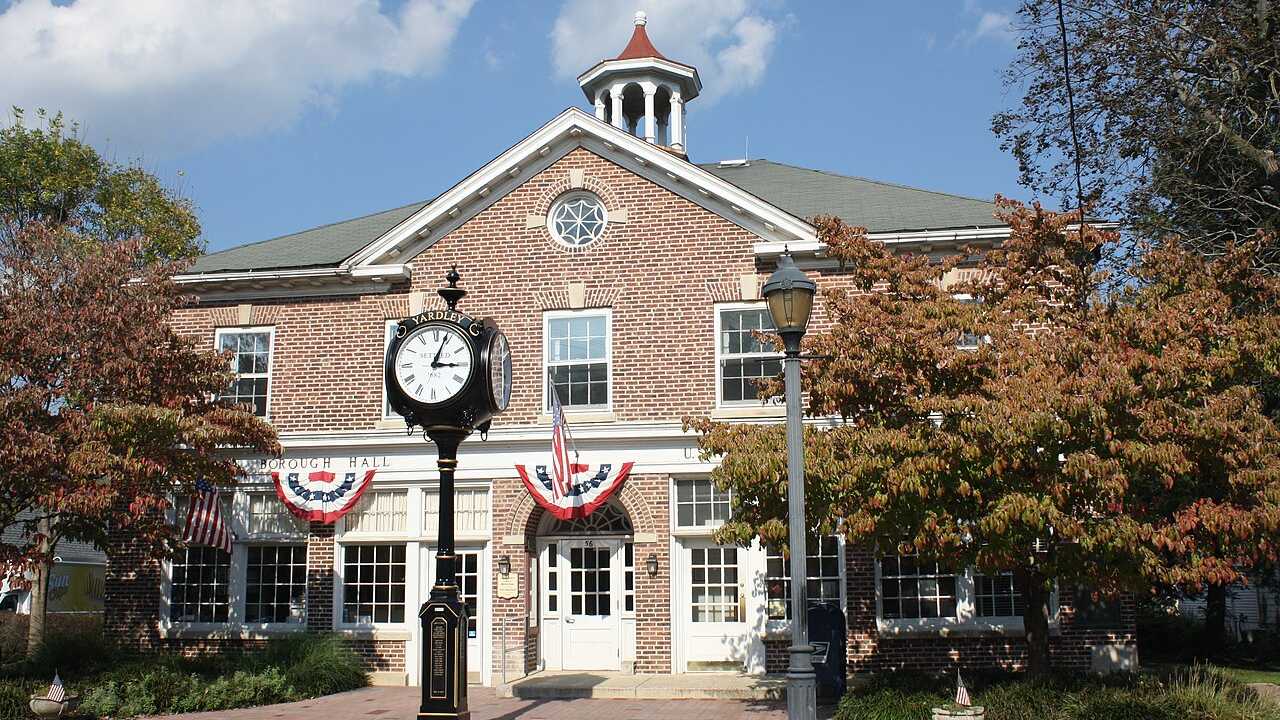
- Address: 56 South Main Street, Yardley, PA 19067
- Hours: By appointment (typically Tuesdays & Thursdays), but forms can be dropped off during regular Borough Hall hours (Mon–Fri, 8:30 a.m. – 4:30 p.m.)
How do you apply for a fence permit in Yardley Borough?
To apply for a fence permit in Yardley Borough, you must follow a specific process involving the submission of applications, fees, and detailed plans. Generally, you are required to obtain both a zoning permit and a building permit to install a fence.
Here are the steps to apply:
1. Complete the Zoning Permit Application
You must complete the “Application for Zoning Permit.” Key information required on this form includes:
- Property Information: Address, lot size, and whether the property is residential or non-residential.
- Construction Details: Select “Erect a Fence” and specify the proposed height in feet.
- Contact Information: Name and contact details for the applicant, property owner, and contractor.
- Floodplain/Historic Status: You must indicate if the property is within a floodplain or the Historic District.
2. Create and Submit a Plot Plan
A plot plan (or survey) must accompany your application. You can use a prepared survey or a sketch, provided it reflects the size and shape of the lot. This drawing must include:
- The length of all property lines.
- Existing and proposed structures (including the fence) and their distance to property lines.
- Names of streets abutting the property.
- Locations of driveways, wells, and septic systems.
- Locations of any bodies of water and the distance to the proposed fence.
- Note: You are required to physically mark property lines and the proposed location of the fence onsite prior to submitting the application.
3. Check for Special Requirements
- Historic District: If your property is in the Historic District, any fence visible from the public right-of-way requires a Certificate of Appropriateness (COA) reviewed by the Historical Architectural Review Board (HARB) and approved by Borough Council.
- You must submit a COA application and 10 copies of the plans at least 14 days (or two weeks) prior to a scheduled HARB meeting.
- Floodplain: If located in the Floodplain Conservation District, you must obtain both zoning and building permits. Fences in these areas have specific design requirements to prevent blocking floodwaters (e.g., no concrete footings, specific open designs).
4. Calculate and Pay Fees
Fees are payable to Yardley Borough. As of the February 2022 Fee Schedule:
- Zoning Permit Fee: $90 for a fence.
- Building Permit Fee: Calculated at 4% of the construction cost (listed under “Alterations” for structures including fences).
- Penalty: If work commences before obtaining the required permits, applicable fees are doubled, plus potential legal and administrative costs.
5. Submit Application Materials
Applications and plans should be submitted to the Zoning Officer/Code Enforcement Office.
- Copies: You are generally required to submit four copies of the application information, including site layouts and descriptions.
- Review: The Zoning Officer will review the application for compliance with ordinances. If six or more parking spaces are involved (unlikely for a residential fence, but possible for commercial), the application may be referred to the Planning Commission.
6. Call Before You Dig
At least three business days before starting any digging for fence posts, you or your contractor must call 8-1-1 (PA One Call) to have underground utilities marked. This is required by law to prevent damage to underground lines.